#189 No Room for Creativity
Omkar Sane writes against the cult of space

Dearest,
Modern discourse often romanticizes space as the womb of creativity: the quiet room, the empty mind, the distance from distraction. This space may be a room, a home, a hill, a nook - any site imagined as fertile through withdrawal. As a practitioner of creativity, I use this assumption as a lens to examine what space is believed to do.

Creativity is imagined as requiring retreat, a clearing out, a protected interior where the self can finally speak. The familiar fantasy of the cabin in the hills or the solitary listener by the sea depends on the belief that thought needs insulation. This entire line of reasoning collapses under the metaphysics of Advaita Vedanta, which does not merely question the self but dissolves the very need for space.

The demand for space presumes a subject who must withdraw in order to produce. Advaita denies such a subject. The egoic “I” that seeks room to think is a superimposition (adhyāsa), not the true knower. When the self is understood as non-dual awareness, there is no interior that must be safeguarded from the exterior. The distinction between inner and outer - on which the idea of creative space depends - simply does not hold.
In Advaita, Ātman is not located. It does not occupy space, move through space, or require space to unfold. Space is not the container of consciousness; it is an appearance within consciousness. If space is already a dependent appearance, it cannot be a prerequisite for anything real. Creativity cannot rely on what is itself unreal. Creativity, then, is not generated but revealed. Silence does not enable it; silence only removes the noise that convinces us something was missing. Constraint does not suffocate creativity because creativity is not housed in space to begin with. Well, there is no space to begin with, because ākāśa itself is mithyā. It has an empirical function but no independent reality.
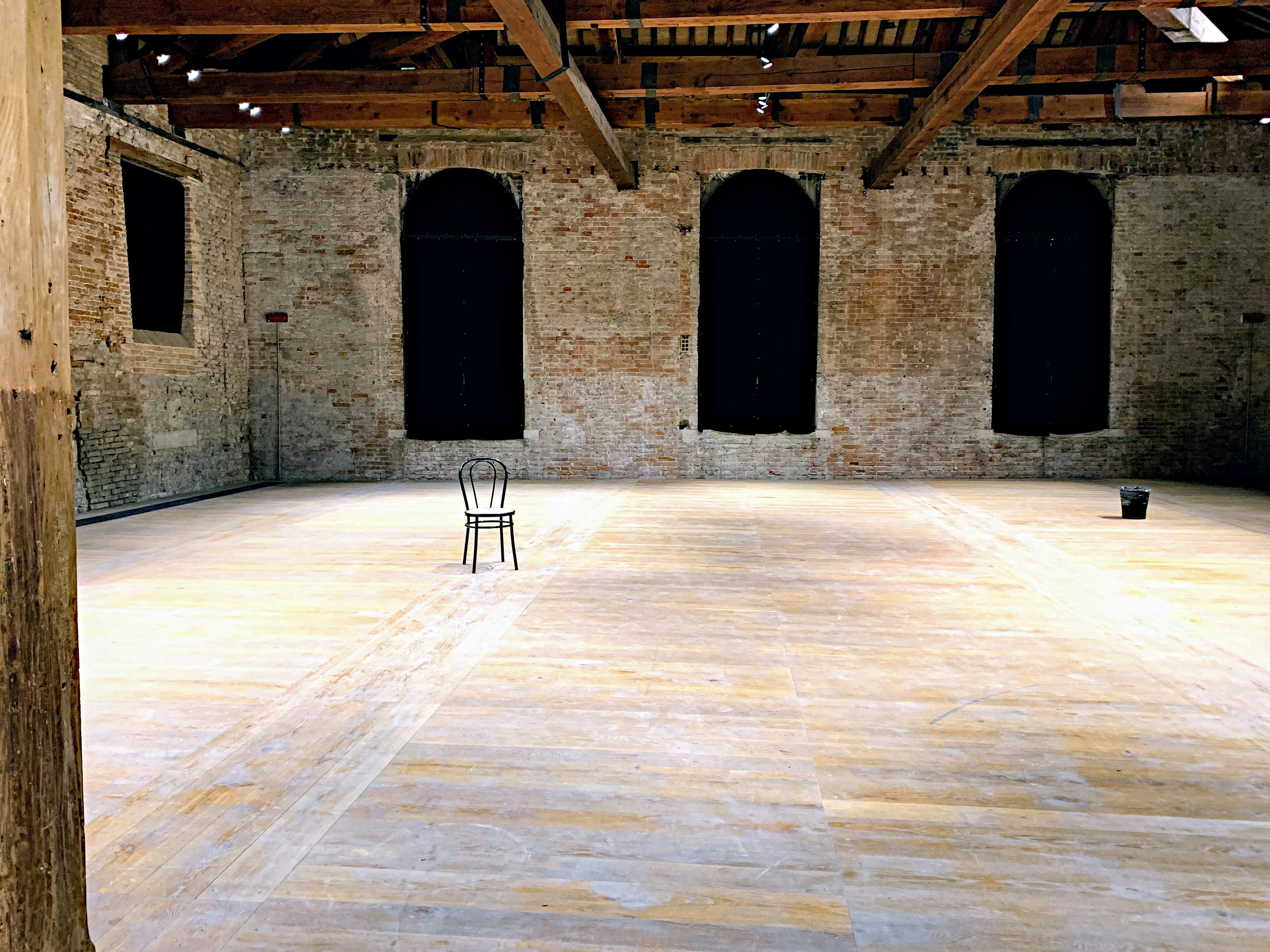
Clinging to space mirrors clinging to the self. Both attempt to stabilize what was never stable. There is no self that requires space. There is no space that creativity depends on.
Hence, the cult of space deserves rejection. It disguises withdrawal as depth, and turns creativity into an accessory. To argue against space is not to argue for noise or chaos, but to reject isolation as origin. Creativity does not need protection. It happens when boundaries fail, when something else speaks through us.
Glad there is a space like this to have this conversation.
Omkar Sane is a man, a myth, a mentor, and a potential mobster—held back only by the parking problem in Mumbai’s busy traffic. He comes up with more ideas over breakfast than most people do in a lifetime (and these are just the ones that make sense). One of his best nonsense ideas is an app called Storysurf, which without ads, PR, or shameless repost requests to family and friends, has garnered over 1 lakh downloads across more than 150 countries.
He teaches at XIC and runs Sane Difference. And as if that weren’t enough, he also happens to be the person who approves my leave requests. Nook is very grateful to Omkar for sharing his thoughts on space.
This dismantles a foundational assumption most creativity discourse takes as axiomatic. The shift from 'creativity requires space' to 'space is itself mithyā' cuts deeper than practical advice—it challenges the metaphysics underlying the entire self-help industrial complex around creative practice. The observation that 'creativity is not generated but revealed' reframes constraint entirely. If space is an appearance within consciousness rather than a container for it, then the endless pursuit of ideal conditions becomes a category error. The parallel between clinging to space and clinging to self is particularly sharp: both attempts at stabilization that mistake appearance for ground. What's striking is how this doesn't dismiss the empirical value of quiet or solitude, but relocates them—not as causes of creativity but as removals of noise that obscures what's already present. The punchline about having this conversation in a space called 'Nook' adds the right touch.